Showing posts with label Archivists. Show all posts

Thursday, September 3, 2009

A Hired Historian (or) Other People's Archives


I couldn't be more excited to be back in Washington D.C. The city, though somewhat familiar, still a lot of surprises. When Emily and I arrived at the Mall a few minutes before an appointment, we stopped at the National Museum of Natural History and looked at a Giant Squid specimen. Later that afternoon I was flipping through the Andrew Jackson Papers at the Library of Congress. How many people do you think have done those two things in an afternoon? Later that day I skipped the gym and sat around eating popcorn to celebrate my accomplishments.

My first couple of days of research in Washington are on behalf of another historian, currently living in California. This makes me feel a bit like a hired hit-man, except with less killing and more historical documents. At the very least, it serves as a nice warm-up for my own work, which I hope to start next week.

Working in unfamiliar archives can be an adventure. Rules vary from archive to archive - but regulations tend to trend in a particular directions. When I started working in archives only a few years ago, people looked at me like I was from Pluto when I asked if I could use a camera to photograph documents. Now, both the Library of Congress and the National Archives ask visiting researchers if they have a camera with them to photograph documents. Some archives allow you to take a box of documents off of your cart, others ask that you only remove a folder at a time. But these are mostly inconsequential differences.

Another challenge of being a hired historian is that you can't really explain to archivists the nature of the project. Explaining my own dissertation to a willing audience is no problem (I say 'willing' because I have, admittedly, been guilty of waxing poetic about my research to audiences that would rather discuss - say - earthworms). But explaining someone else's research as it progresses can be more of a challenge. In this case, I was looking for documents related to military history - which isn't exactly my specialty.

And to make my inadequacy, my father sent me an e-mail this evening about a research trip he did on my behalf in Minnesota. The man stopped at a historical society and read newspapers in GERMAN because he thought he might be able to find some more information on an incident that is of interest to me. And you know what? The man absolutely nailed it. He found an article on microfilm, can I just say this again, in GERMAN. This dude took his last German class in the 1960s and the man walks into a research library and reads Gothic print Deutsche in his free time.

An archive starts to feel like home when you begin to know the people. You run into the same researchers day after day. You get to know the archivists. The nerdy intern requests to be your friend on facebook. You suggest a book to another historian, you goof off with the archivists, and if you're really nice, the interns will let you play soccer with them.

Sure, it is was an experience working with documents at two of the largest research centers in the world. I look forward to when my own research takes me there. But for now, I find the experience of working in smaller archives to be more satisfying on a personal level. Intellectually, I'd argue that working in small archives has made me a stronger historian. I certainly wouldn't argue that archivists at major institutions aren't helpful - quite the contrary, they are often well-trained and extremely helpful. When you're a familiar face, however, archivists tend to go out of their way to make sure you get what you need.

It seems as though every year I need to re-teach myself how to read handwriting from the 19th century. Despite the fact that it is the same language that I pretend to speak everyday, it feels like I'm working on a foreign tongue. And it doesn't even come with those fun Rosetta Stone practice games.

There is both a certain level of excitement and a level of trepidation in moving to a new place and starting a new job. This is certainly true in my case, anyway. I'm pining for a return to my archival home at the Smithsonian.

Wednesday, June 18, 2008

The "Linear Foot" and other Sexy Archival Terms

Before arriving in D.C. for the summer all three of us conducted a certain amount of internet research.  Grant proposals typically require a description of your proposed project, plus a timetable of how long you expect the work to take to complete.  For historians who work in archives, the term "linear foot" should be a familiar one.  Archives typically have online catalogues, sometimes with finding aids describing what is available in each collection.  If you're lucky, you will get all of this plus a notation of how many linear feet the collection is. Two of the collections I was interested in peeking at this summer were noted as being about four linear feet.

The Society of American Archivists (SAA) defines a linear foot as, "a measure of shelf space necessary to store documents," or alternatively, "a measure of motion picture stock; film footage."  The SAA provides a little more detail here: linky.  

So what does that mean for you, Joe Grad Student?  Not much, unfortunately.  

Preparing for this summer was really my first experience in writing grants based on archival materials measured in linear feet.  Most of my archival experience up to this point has been based in museums, or in archives nearby where I lived.  So I guess you could say that this is my first trip taken specifically to visit an institution that bills itself as an archive, rather than requesting to see files in museums that could be considered archival.  

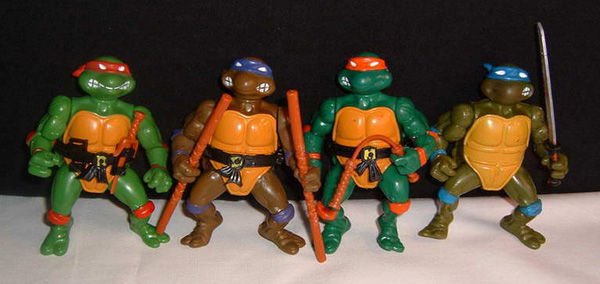
In fact, the majority of the museum archives I have worked in sort the files I look at by catalogue number or accession.  An accession can basically be defined as a specific acquisition to a collection.  Museums change how they register collections over time but accessions are usually discreet groups of objects brought into the larger collection.  Let's say I donate my collection of Teenage Mutant Ninja Turtle action figures to the Smithsonian.  It would be considered a single accession with each of the action figures being assigned individual catalogue numbers.  The museum then creates an accession file and places in it all of the relevant documents recording the acquisition.  An accession file could include a huge number of documents, an academic journal article a famous scholar wrote about the significance of my Teenage Mutant Ninja Turtle collection, or an article based on an interview I did with the New York Times on my collection.  The accession file might also simply contain a catalogue card recording that I had four action figures and donated them to the museum on X date.  The accession file could be a single sheet of paper, or it could be several inches thick.  

You get the idea. 

Unlike an accession file, an archival box is consistent in size.  About four inches.  A linear foot, based on my California Math, is about 3 boxes.   

But, as I've been reminded this summer, the fact that a linear foot is consistent in size does not mean that it will be consistent in the amount of time it takes to trudge through as a historian. The first collection I looked at this summer was listed as containing correspondence, catalogue information, and other miscellaneous items.  I was mainly interested in looking at the correspondence in the collection, and, in all, it turned out to be a little less than a fourth of the collection.  

When I wrote to archivists preparing to take this trip this summer, I continually asked, "How long do you think it will take to get through this collection," or, "how long does it take to get through a linear foot?"  The answer was always the same, "it depends."  While this was frustrating for me as I tried to write grants, it has turned out to be painfully accurate. For some reason, granting agencies don't really like, "I'm not really sure how long," written in crayon all over grant applications.  

Here are some of the compounding factors I've begun to think about when estimating how long a collection will take.  

When was the collection created?  In the very late 19th century and early 20th century, carbon copies of correspondence started to become more common.  Carbon paper, while invented much earlier, seems to have become more widely utilized when married with typewriter.  In my experience, handwritten correspondence, despite the fact that it is written on thicker paper takes longer to comb through.  Cursive writing of the 19th century almost has to be translated, as if in another language.  Part of what I was hoping to accomplish this summer was to become more proficient in reading post Emancipation American scribble.  Later documents, often typed on carbon paper, are typically easier to read, but are often printed on the super-thin duplicate copy paper.  Because of this, I've found that archivists are typically able jam more information per linear foot in collections created later.  As you move back in American history, collections tend to be more fragile and the paper becomes thicker, so it takes up slightly more room on the shelf.  

I'm sure that by now you're really, really curious about the history of carbon paper, so click here for the non-stop action of paper history.  

An additional factor when thinking about what an archival collection contains is to ask, how much of the collection will be useful to you?  While an undergraduate, I looked through some of the YMCA archives at the University of Minnesota.  The collection contained a large number photo slides that were of interest to me.  The slides, held in thick plastic sheets, take up a lot of room compared to paper.  In other words, if your linear foot contains only correspondence it will probably take a bit longer to trudge through.  If the collection contains things like photo slides, pamphlets, or, I don't know, how about credit cards and gift cards (really?), the collection should take less time to examine per linear foot.  This picture is closer to what I'm thinking of, except, instead of some nerdy card game, the sheets contain sweet historic slides.

Finally, what type of notes do you take when visiting archives and how much do you intend to copy or photograph?  Historians frequently talk about their methods of taking photographs in the archives, but we often fail to create dialogue about how we take notes.  I use Microsoft Word's note taking feature on my MacBook.  I find this to be must faster than taking notes by hand and it allows me to transcribe a much larger number of documents word for word.  If you hope to take photographs of archival materials, make sure the archives allow you to do so.  If not, inquire in advance how much it will cost to make photocopies and budget the added cost into your grant proposals.  If you're taking notes by hand, it will probably take you much longer to get through the "average" linear foot.  If you're taking photographs, you can get through documents much faster, because you only have to skim them to see if they are relevant to your project (I'll only add that having a camera that snaps and reboots quickly is essential for efficient work in the archives).  

The difference between the two collections I've chosen to look at for this summer could not be more striking.  While both involve museums, one consists of documents from the mid-19th century while the other comes from the mid-20th century.  The first contained thicker documents and more miscellany that wasn't useful for my project.  I moved through the collection fairly quickly and certainly much faster than I anticipated.   The collection I am working my way through now contains hundreds of information filled sets of correspondence, all typed on extremely thin carbon paper.  The work is extremely slow.  

So how long will it take you to get through that linear foot of archival documents?  The answer, unfortunately, is "it depends".